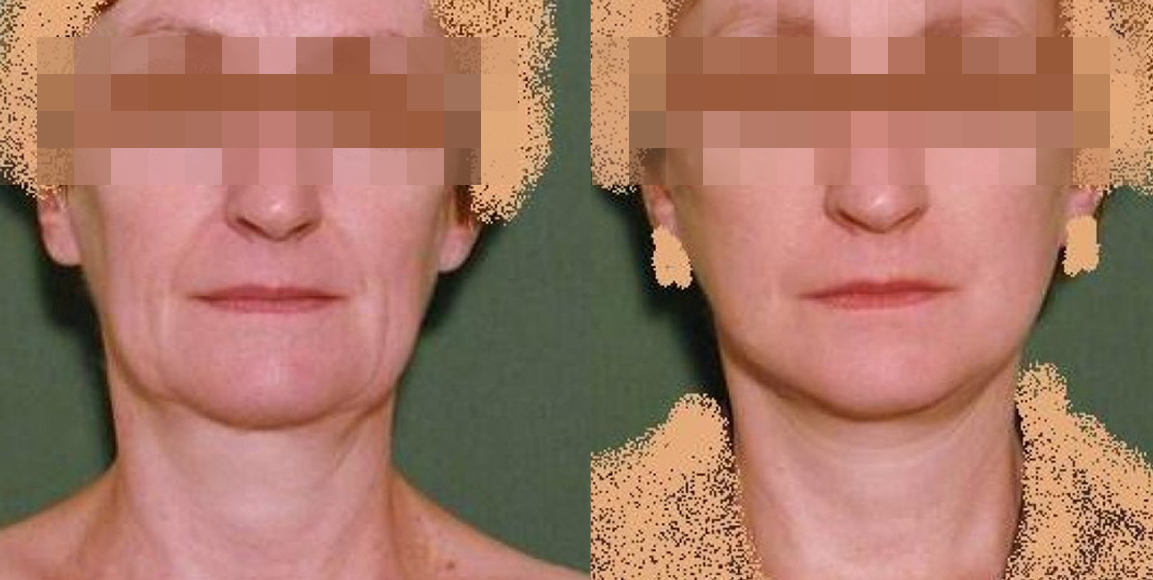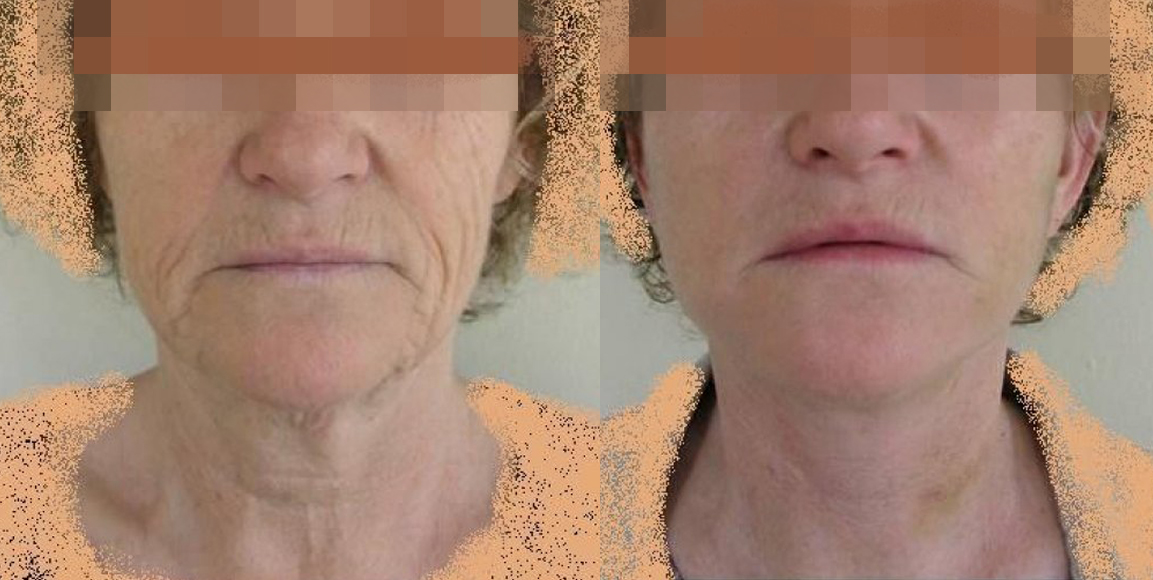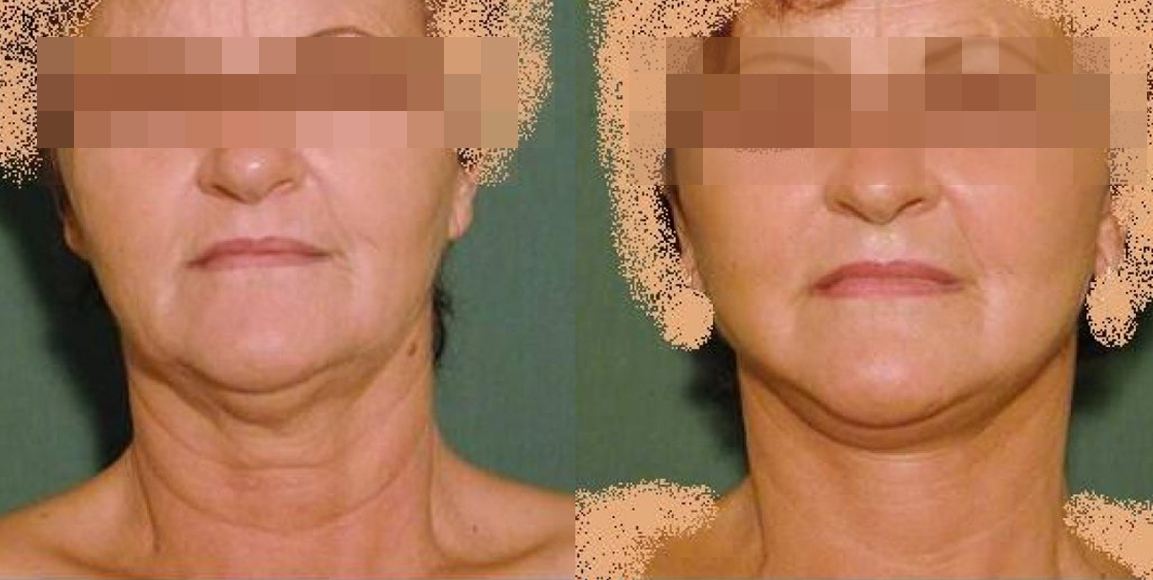
The face and neck lifting solves the problems related to the ageing symptoms. If it is necessary to perform also operation of eye lids, we recommend it to be made only after the face lifting. A maximum effect can be achieved if an operation is made in an optimum age range with respect to the type of face, skin quality and elasticity.
A personal consultation with an experienced plastic surgeon is the very first and important step. A good precondition for successful operation performance is a good health condition determining the upper age limit for that operation.
The operation removes excess skin on the neck and face and partial smoothing of some wrinkles. However, it should be noticed the wrinkles are caused by mimic muscles at every person individually, and therefore it is not possible to remove by operation permanently soft perpendicular wrinkles on upper and lower lips, and as for forehead wrinkles, they cannot be influenced by such operation at all. An operation cannot stop the ageing process, however, it can postpone its symptoms by several years, after which such operation can be repeated.
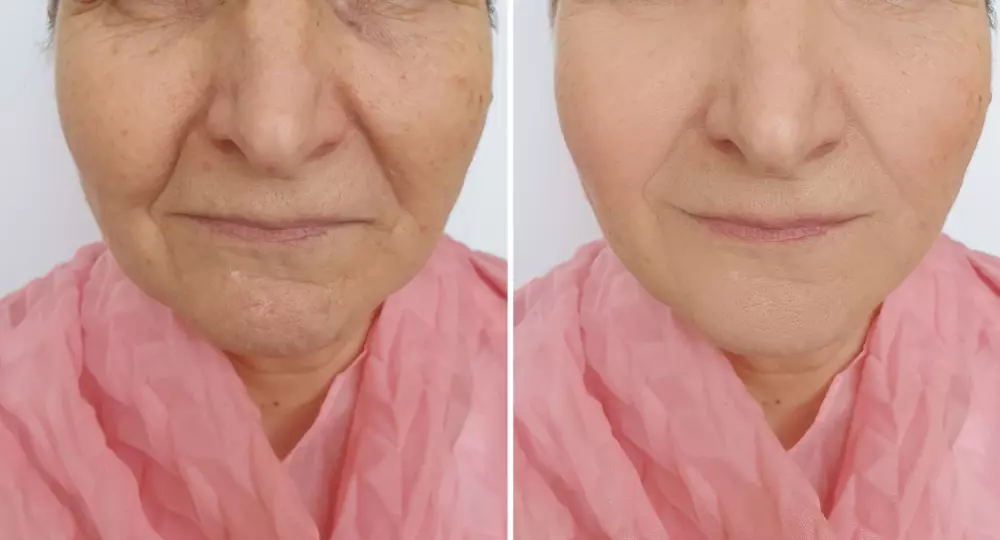
Facelifts can be performed using several techniques, which differ in terms of the depth and extent of tissue manipulation beneath the skin. At the Institute for Aesthetic Medicine, we perform the two main approaches: the classic SMAS lift and the deep plane technique.
In an SMAS lift, the musculo-aponeurotic layer (SMAS), which is located beneath the skin, is tightened and the skin and subcutaneous tissue are redraped over it. The Deep Plane technique operates at an even deeper level, enabling the surgeon to shift the entire layer of facial tissue without separating its individual layers.
The technique chosen by the surgeon depends on the client's specific requirements, such as tissue condition, facial anatomy and the desired outcome. Our goal is to achieve the most natural-looking results, both immediately after the procedure and in the long term.
We routinely use both techniques: SMAS and Deep Plane. The choice of procedure is not a matter of trends, but of what will truly benefit the individual face and its tissues. We always select the solution that provides our clients with the most natural and long-lasting results," says Dr Dušan Záruba, a plastic surgeon and the Head Physician at the Institute for Aesthetic Medicine.
A facelift usually takes between one and a half and three hours. Each surgeon approaches the procedure individually; the precise placement of incisions and the specific steps of the operation depend on the chosen technique. At the Institute for Aesthetic Medicine, we use both the classic SMAS lift technique and the deep plane technique. The surgeon will recommend a specific approach based on clinical indications, anatomy and the client's wishes, in order to achieve the most natural-looking result.
The operation is made under a combination of local and complete anaesthesia. An operation cut is made from the hairy part of the temporal region in the downward direction before the auricle and along the auricle of ear to the fissure behind the auricle and in a back direction to the hair. The skin is released in an indicated extent from the base, whose excess is removed, and structures laid in the subcutis are tensioned.
The first bandage replacement is made on the next morning following an operation before releasing the patient to home treatment. Until the bandage removal (the 4th or 5th day after the operation), a rest regime is required in order to reduce the risk of post-operation bleeding and face swelling. A face or eye lid swelling is best seen only on the third or fourth day after operation and it is a normal post-operation symptom as well as blood suffusions on neck or lower eye lids.
After the bandage removal, hair should be washed, and then the healing continues without bandage, with regular fair showering once a day. We recommend the face to be protected by a scarf at night.
Next examinations and bandage replacements are made in an interval of three to five days, when stitches are removed gradually up to the 10th to 14th day after operation.
In case of any subjective difficulties (strong pain, pressure) or any complication (fever, bleeding with bandage penetration, we require the patient to appear as soon as possible at the department. The recovery is individual and depends mostly on individual body healing abilities.
The feelings of tension and sensitivity disturbance in operated areas are common accompanying symptoms and they should be stabilized after several weeks.
The patient is expected to set such conditions for a period of several days after her operation in order to be able, in case of any subjective problems or complication, to come as soon as possible for examination to our department.
The data presented is based on a common post-operation course. However, the recovery is an individual process depending not only on healing abilities of every individual body, but also on every patient´s conscientiousness.
A positive operation result and mutual satisfaction is in your interest as well as in ours. Mutual trust and co-operation of the patient with the surgeon is a vital precondition.